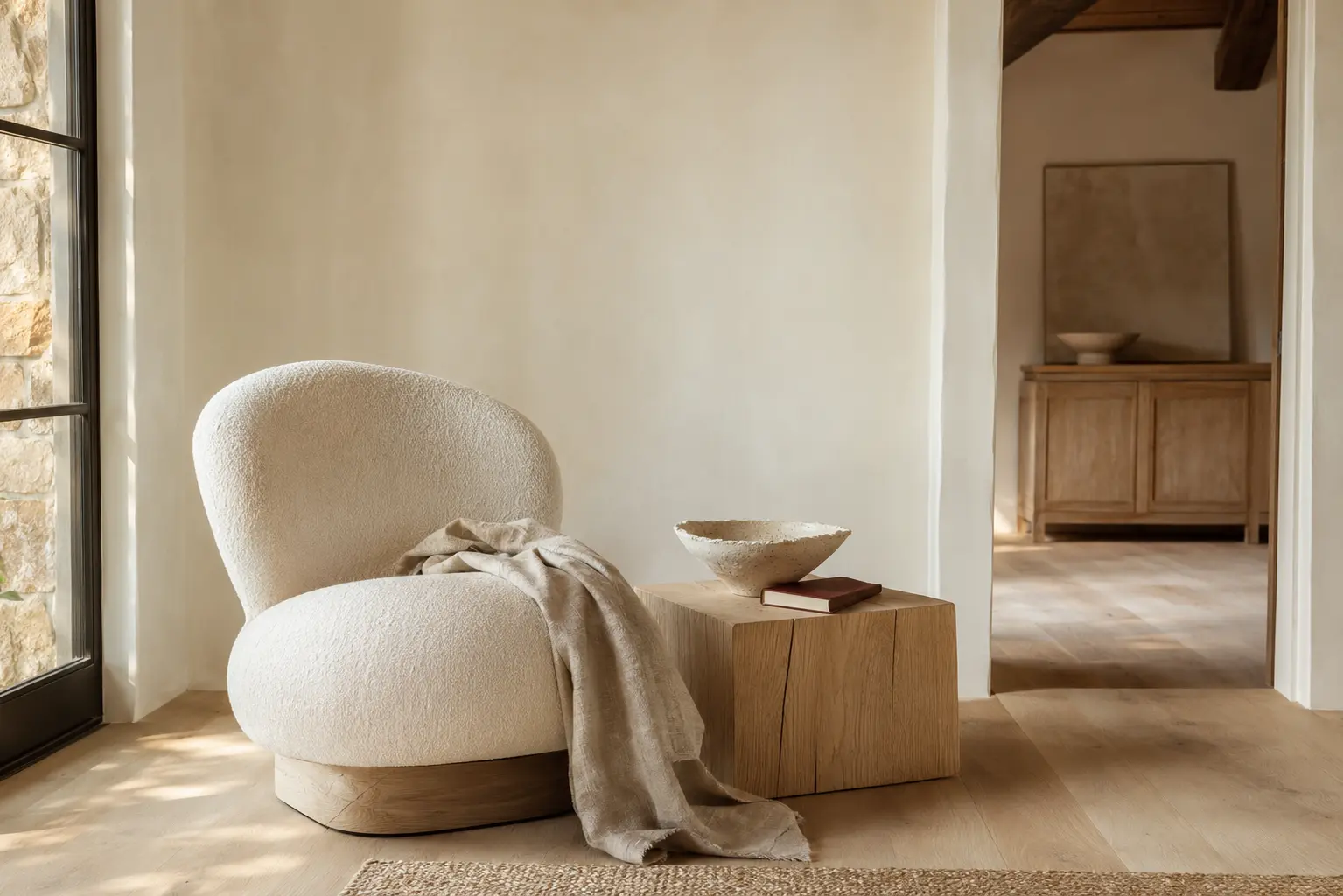
A home can hold many things and still feel thoughtful. The question is not simply how much we own, but whether our belongings support the way we want to live.
Living with less, but better, is not about chasing perfection through minimalism. It is about making choices slowly enough to recognize quality, usefulness, and genuine affection.
Begin with what creates friction
Notice the drawer that never closes, the shelf you avoid dusting, or the closet where useful things disappear. These small irritations reveal where quantity has begun to work against you.
Edit one contained area at a time. Keep what is used, loved, or difficult to replace. Release duplicates that do not serve a real purpose and objects that belong to an imagined version of your life.
Upgrade through use, not trends
The things worth improving are often the ones already in your hands every day: a pan, a bath towel, a reading lamp, a pillow, or the chair where you begin each morning.
Wait until you understand what the current object gets wrong. Then look for the replacement that solves that specific problem. Better becomes meaningful when it is felt repeatedly.
Choose materials that can live
Natural wood, linen, wool, stone, leather, and handmade ceramic often become more interesting with use. They show variation, soften at the edges, and ask less of us than surfaces that must remain flawless.
Durability matters, but so does repairability. A piece with replaceable parts, washable fabric, or a finish that can be renewed has a longer and more generous life.
Allow empty space to be useful
Open space gives a room flexibility. An empty table can become a place for a project, dinner, or flowers brought home unexpectedly. An unfilled corner leaves room for the right piece rather than the fastest one.
Space also allows the objects you keep to have presence. A single bowl on a table can feel abundant when it is not competing with six other things.
Let better include joy
Utility is not the only measure. A painting, a beautiful glass, or a peculiar vintage object may earn its place simply because it gives pleasure. Better should make life feel richer, not more austere.
The result is not a finished inventory. It is a home with enough room to breathe, enough character to feel personal, and belongings chosen for the life being lived now.