This story contains affiliate links. If you purchase through them, I may earn a small commission at no additional cost to you. As an Amazon Associate I earn from qualifying purchases.
Lighting changes more than what we can see. It changes the pace of a room. Bright overhead light tells us to stay alert and keep moving. A shaded lamp beside a chair asks us to settle in.
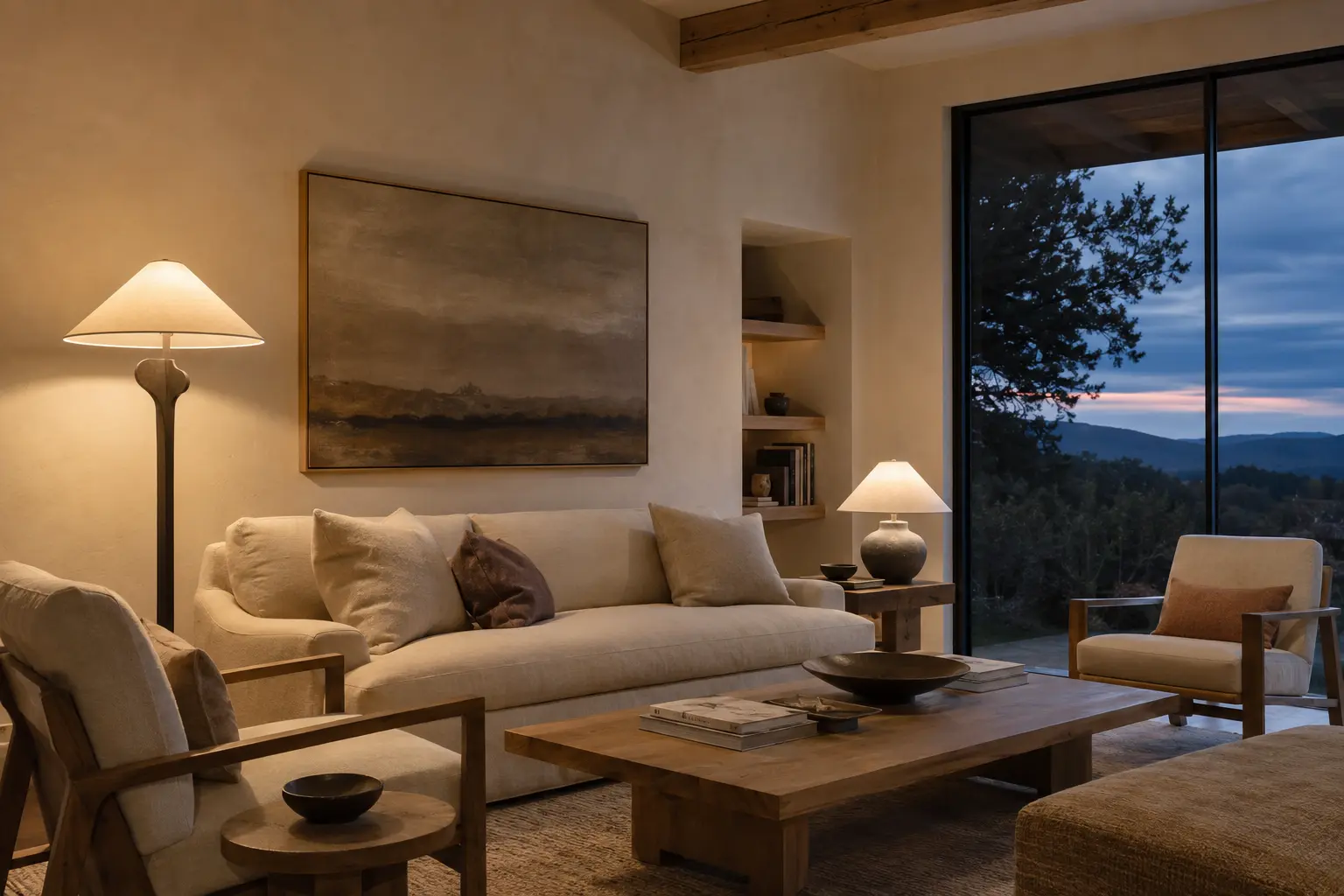
The most welcoming rooms use light from several heights and directions. No single fixture is responsible for everything, and the room becomes softer because of it.
Begin below eye level
Place the first lamp where the room needs intimacy: beside a sofa, on a console, near a reading chair, or at the end of a kitchen counter. The pool of light should support an activity while warming the surfaces around it.
In a larger room, repeat the idea rather than increasing the brightness of one source. Two or three gentle lights create depth that a strong central fixture cannot.
Pay attention to the shade
A shade determines how light leaves the lamp. Linen and paper diffuse it. An opaque metal shade directs it downward. A narrow shade can produce a focused reading light, while a wider one spreads a softer glow.
The best choice depends on the purpose. What matters is avoiding a bare, glaring bulb at seated eye level. Comfort begins with what the eye does not have to fight.
Choose warmth consistently
Bulbs around 2700K generally create the warm residential light associated with lamps and candlelight. Whatever temperature you choose, keep it consistent within connected spaces. Competing cool and warm bulbs can make a calm palette feel disjointed.
Dimmers are useful wherever brightness needs to shift throughout the day. They allow one fixture to support cleaning, cooking, conversation, and late-evening quiet.
Light what matters
Not every corner needs equal illumination. Let light fall on the places you want to notice: a painting, the texture of a plaster wall, a stack of books, or the edge of a wood cabinet. Gentle contrast gives a room dimension.
A candle can be part of the layer, but it should not have to rescue an otherwise harsh room. Build a comfortable foundation first, then add flame for movement and atmosphere.
Make the evening change visible
As daylight fades, turn on lamps one by one rather than waiting until the room feels dark. This small ritual marks the transition into evening and makes home feel especially welcoming.
The warmest light in the room is usually not the grandest fixture. It is the one placed exactly where you need it, turning an ordinary corner into somewhere you want to stay.
For a small lamp with a warm glow, the Marmor marble touch lamp is one of my finds.