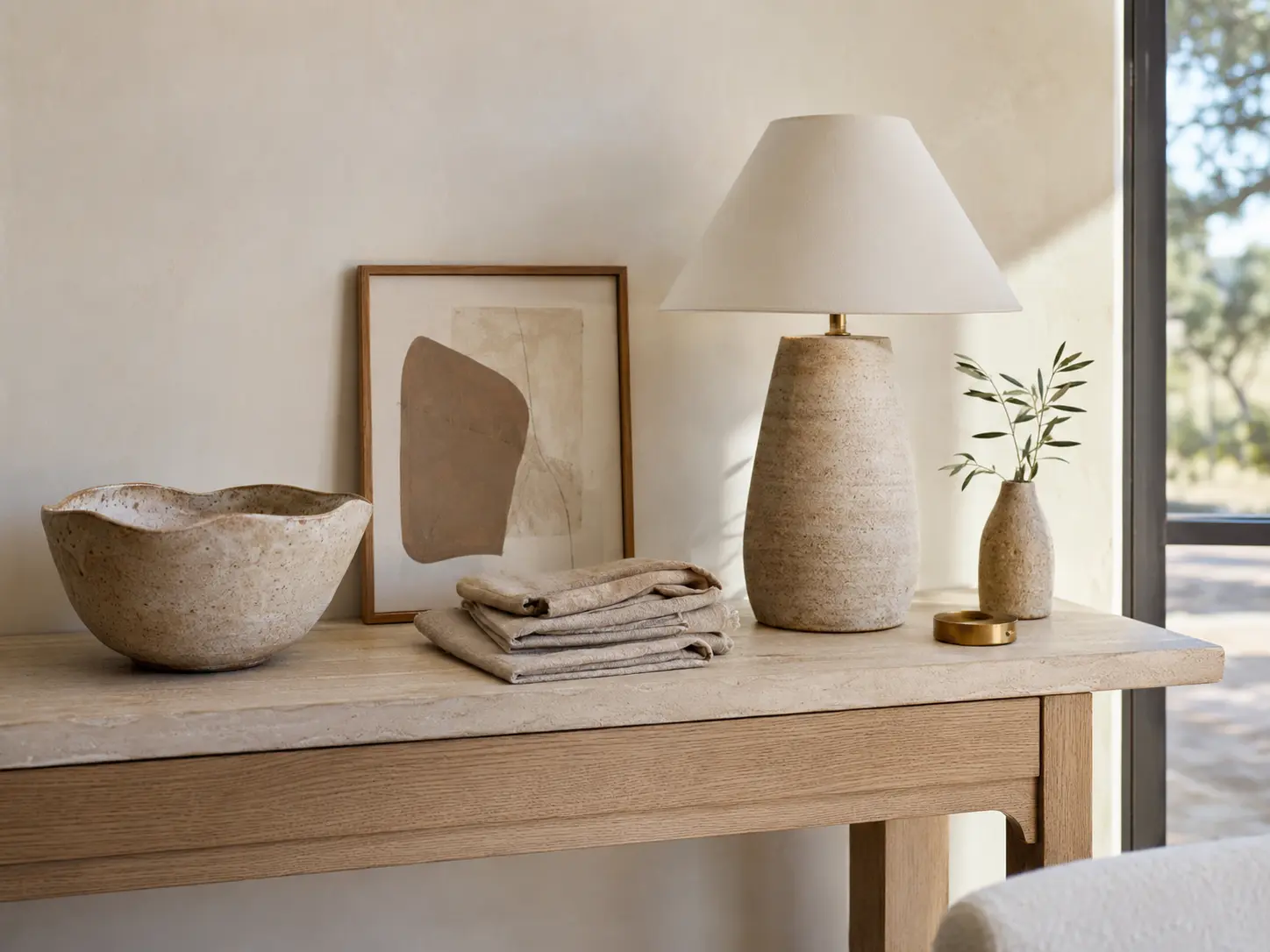
A collected room is not defined by a particular style or price point. It may be spare or layered, traditional or modern. What matters is that it feels personal. The objects have a relationship to one another, but they do not look as if they arrived in a matching set.
This kind of room is built through editing as much as adding. It asks us to choose what contributes warmth, function, memory, or beauty—and to give those things enough space to be noticed. These five details are a good place to begin.
1. Light from more than one level
Overhead lighting may illuminate a room, but it rarely gives it depth. A collected room uses several smaller pools of light: a lamp beside a chair, a shaded lamp on a console, perhaps a picture light or candle glow.
Vary the height and purpose of each source. The goal is not perfect symmetry. It is a room that changes gently from day to evening and supports the way you actually live—reading, talking, or simply winding down.
2. Materials that invite touch
Texture keeps a neutral room from feeling flat. Linen, worn wood, glazed pottery, woven fibers, stone, aged metal, and soft wool each reflect light differently. Together, they create quiet richness without relying on pattern or ornament.
Try to include something smooth, something woven, something soft, and something with visible age or variation. A new linen sofa can live beautifully beside an old wood table. A simple brass tray can warm a limestone surface. Contrast is what makes both pieces more interesting.
3. One piece that could not belong to anyone else
Every room needs something specific to the people who live there. It might be a framed drawing from a child, a bowl brought home from a trip, an inherited table, or a photograph that makes you stop for a moment.
Personal objects should not be scattered everywhere. Give one or two meaningful pieces room to hold attention. They do not need to match the palette perfectly. Their value is the story they bring—and stories are what keep a beautiful room from becoming anonymous.
4. A mix of shapes and eras
Rooms made entirely of straight lines can feel rigid; rooms filled with soft curves can lose structure. Balance a rectangular sofa or cabinet with a round table, a sculptural lamp, or a vessel with an imperfect silhouette.
The same principle applies to age. Mixing one older or handcrafted piece into a mostly new room creates immediate depth. You do not need a serious antique. A vintage stool, an old breadboard, or a timeworn frame can introduce the sense that the room has evolved rather than been installed.
5. Useful things displayed beautifully
A home feels lived in when the things we use are allowed to be visible. Books beside a chair, a basket holding throws, a tray for keys, or a ceramic crock of kitchen tools can be both functional and pleasing.
Containment is what keeps usefulness from turning into clutter. Group small objects on a tray. Stack a few books rather than filling every surface. Use a substantial bowl or basket to gather the loose things that naturally appear. Then leave some open space around each grouping.
Let the room remain unfinished
A collected home is never truly finished. That is part of its charm. Resist filling an empty corner simply because it is empty. Wait for the right chair, painting, or table to find you. The pause will make the eventual choice more meaningful.
Choose slowly. Move things from room to room. Take something away and notice whether you miss it. Over time, the room will become less about following a formula and more about recognizing what feels right to you. That is when it begins to feel like home.