This story contains affiliate links. If you purchase through them, I may earn a small commission at no additional cost to you. As an Amazon Associate I earn from qualifying purchases.
Luxury at home does not have to mean formality, excess, or saving beautiful things for company. More often, it is the simple pleasure of something working well and feeling good every time you use it.
A quiet luxury improves an ordinary ritual. It may be as practical as a bedside lamp you can reach without getting up, or as sensory as linen sheets that soften with every wash. These details rarely announce themselves, but together they shape how a home feels.
Lighting that changes the pace
Few things alter a room as quickly as light. In the evening, switch off the overhead fixtures and rely on lamps placed at eye level or below. Warm bulbs, fabric shades, and dimmers soften both the room and the mood.
Consider the first light you turn on in the morning and the last one you use at night. A small lamp in the kitchen, a shaded sconce by the bed, or a gentle light in the entry makes transitions feel calmer. It is a modest change with an outsized effect.
Textiles that improve with use
Natural materials bring comfort without fuss. A linen napkin does not need perfect ironing. A wool throw becomes more appealing when it is left within reach. Cotton towels with a substantial weight turn a routine shower into a small reset.
Choose fewer textiles, but choose them for touch as well as appearance. Washability matters. The most luxurious pieces are the ones you can use freely, not those that create another set of rules.
Everyday objects with presence
Pay attention to what you touch most: the mug you reach for each morning, the water glass beside your bed, the tray where you leave your keys. These objects earn their place through use, so they are worth choosing thoughtfully.
A handmade bowl, a well-balanced knife, or a simple wooden box can make an everyday surface feel considered. The aim is not to replace everything. Upgrade slowly, beginning with the things that are used often and have an obvious job to do.
A place to pause
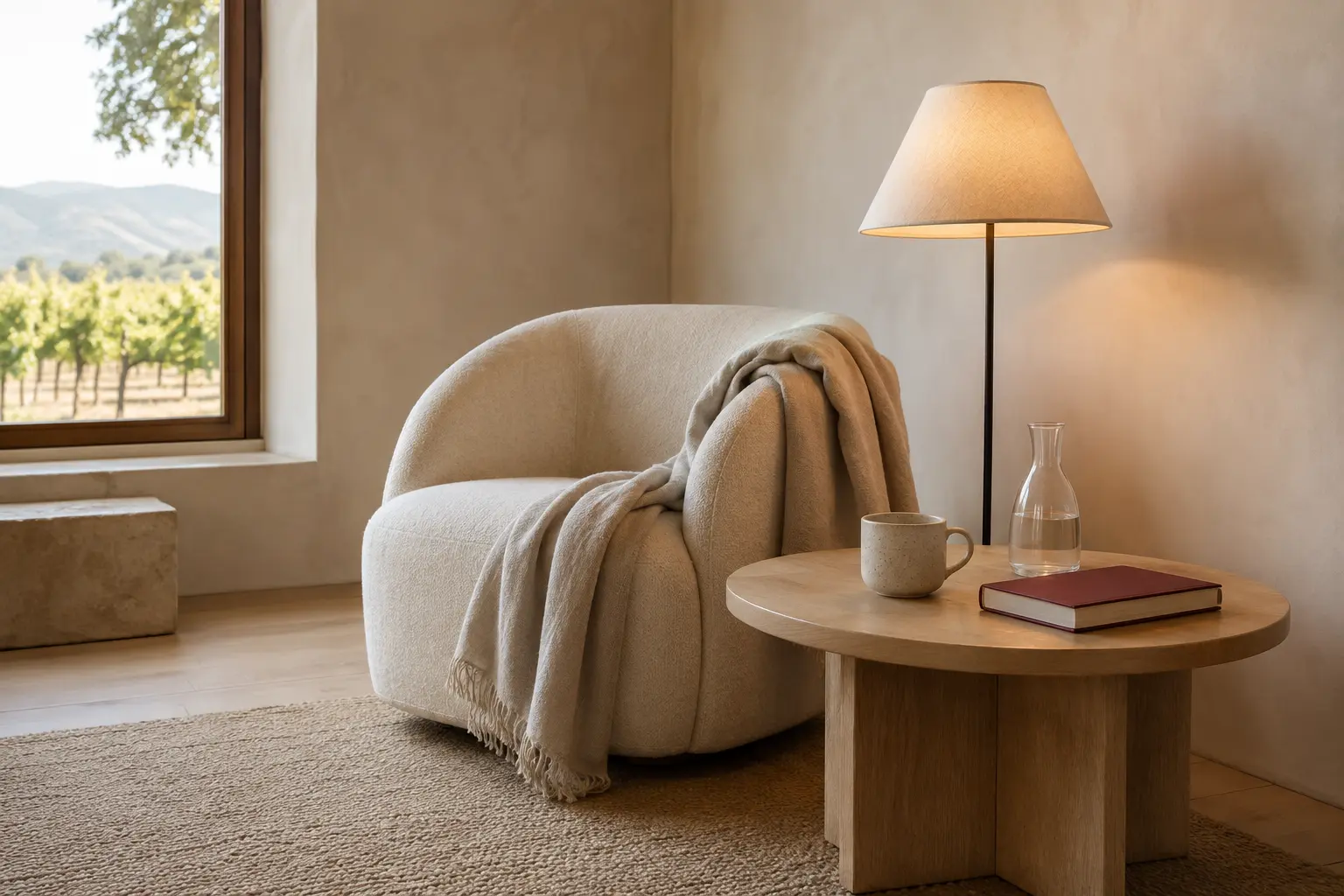
Comfort is easier when a room offers a clear invitation. A chair with a lamp and a small table says sit down. A bench near a window says stay for a moment. A tray with a carafe and two glasses turns an unused corner into a destination.
Look for one place in your home where you naturally slow down, then support it. Add the thing that is usually missing: somewhere to set a cup, a softer cushion, a basket for a book or throw. This is decorating in service of living.
Something beautiful for no reason
Practicality is important, but not everything needs to justify itself. A branch with an interesting shape, a small painting, a stone from a memorable place, or a candle whose scent changes the room can offer pleasure without performing a task.
Keep these gestures restrained enough to notice. One vase on a cleared table often has more impact than several competing arrangements. Beauty becomes a quiet luxury when it creates a moment of attention.
Time, ease, and permission to use it all
Ultimately, the most valuable luxury is ease: fewer objects to manage, comfortable things close at hand, and rooms arranged around real routines. It is also permission—to light the candle on a Tuesday, open the wine with takeout, and use the linen napkins even when dinner is simple.
A beautifully lived home does not wait for a special occasion. It gives ordinary days texture and warmth. That is what makes these small choices worth collecting.