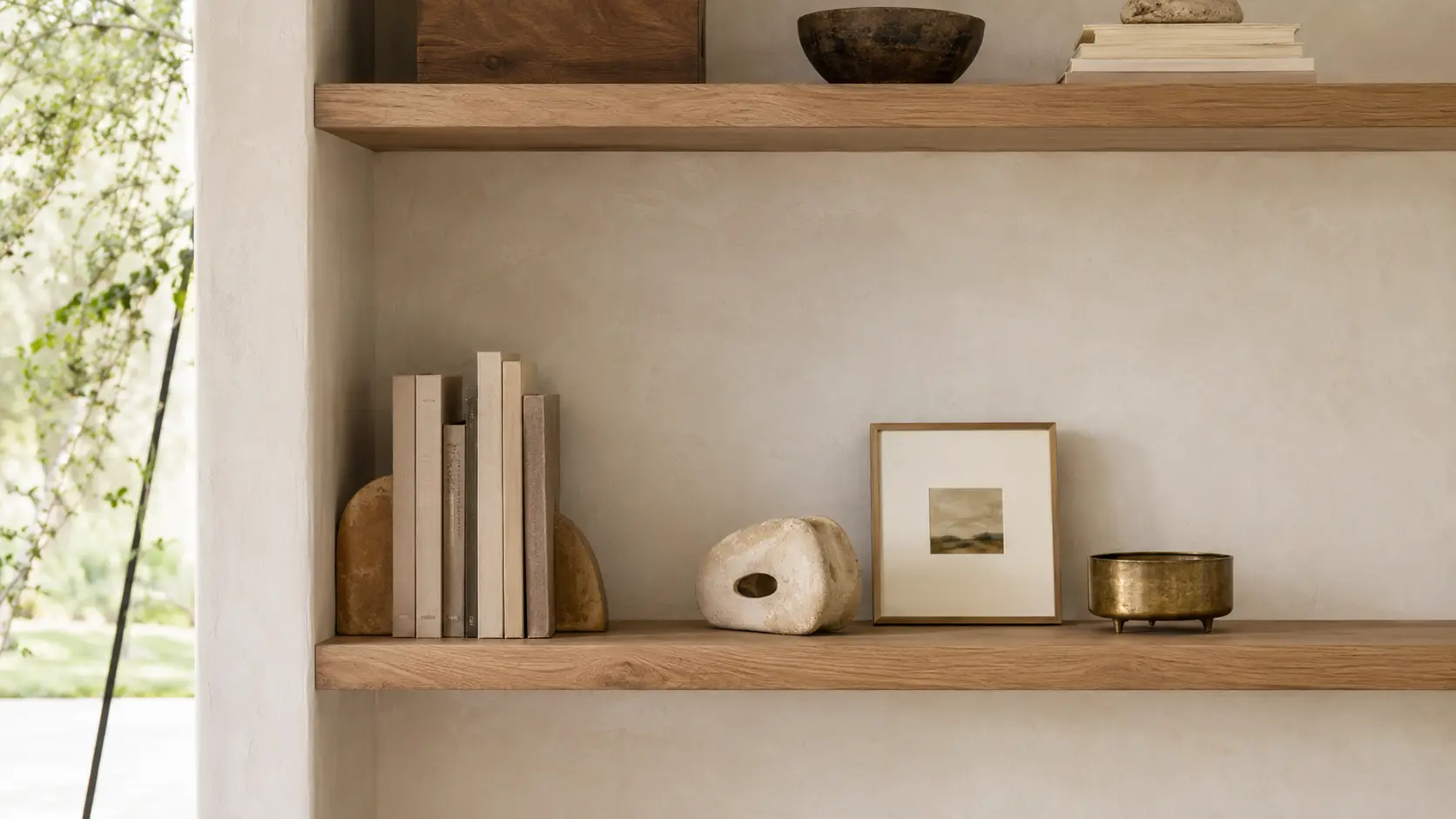
A shelf can become strangely intimidating. It is only a narrow surface, yet the moment we decide to style it, every object seems either too small, too ordinary, or in need of a partner. The result is often more arranging than living.
A good shelf does not need to be full or perfectly balanced. It needs rhythm, a little breathing room, and enough personality to feel connected to the home around it. Begin with what you already own and let the arrangement stay slightly imperfect.
Start with the pieces that have a reason to be there
Gather books you return to, a bowl made by someone’s hands, a framed photograph, or an object brought home from a memorable place. These pieces give the shelf a point of view. Decorative objects can support them, but should not outnumber them.
Remove anything that is only filling space. An empty stretch of shelf is not unfinished; it is what allows the objects beside it to register.
Build in small groups
Work in loose groups of two or three rather than lining everything up. Stack two books and place a small object on top. Pair a tall vessel with a lower bowl. Let one framed piece lean instead of hanging every bit of art.
Change the height from group to group so the eye moves naturally. If every object ends at the same level, the shelf can feel stiff even when the pieces are beautiful.
Repeat one or two quiet threads
Repetition brings calm. It may be a material—warm wood, cream pottery, aged brass—or a color that appears in several small ways. Keep the connection subtle. A burgundy book spine, a muted textile, and a small piece of art can carry the same tone without becoming a theme.
Contrast matters too. Place something organic beside a clean-lined frame, or an old object near a new one. The difference gives both more presence.
Step back, then take one thing away
Stand across the room before making the final adjustment. Shelves are experienced as part of the whole space, not from six inches away. Notice where the eye gets stuck or where several small objects begin to read as clutter.
Then remove one thing. You can always return it later. The last edit is often what turns a collection of objects into a composition that feels easy.
Let it change
Shelves do not need a permanent arrangement. Move a bowl to the table when you need it. Add a branch in spring, a stack of new books in winter, or a photograph after a family visit. The movement keeps the room alive.
When a shelf holds useful, meaningful, and beautiful things with a little space between them, it has done enough. Stop arranging and enjoy the room.