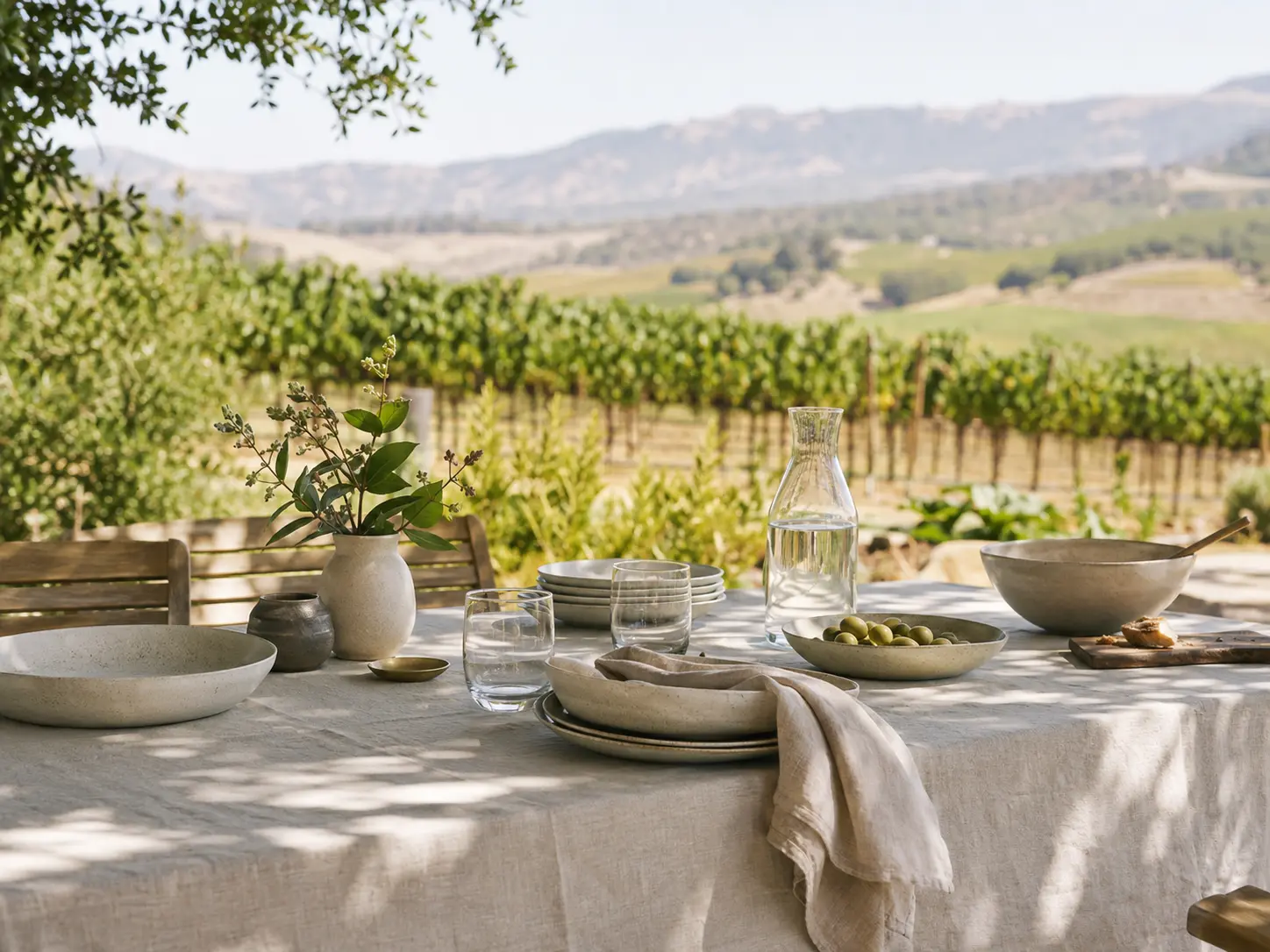
There is a particular kind of ease you feel in a welcoming home. The lighting is warm. A drink appears without ceremony. You are invited to sit wherever you feel comfortable, and no one apologizes for the stack of mail on the counter or the dog wandering through the room.
That ease is not accidental, but it also does not require elaborate planning. Good hosting is less about producing an impressive evening and more about helping people settle in. When we stop treating our homes like a stage, we make more room for connection.
Begin with how you want it to feel
Before deciding what to serve or which dishes to use, choose the mood. Maybe it is a long Sunday lunch with nowhere else to be. Maybe it is wine and something warm from the oven after a busy week. A clear feeling makes every other decision easier.
For most gatherings, relaxed is a better goal than flawless. Use lamps instead of overhead lighting. Put on music before the doorbell rings. Set out the first drink and one small bite so guests have something to do with their hands while everyone arrives.
Set the table you already own
A beautiful table does not need matching pieces. In fact, a little variation often makes it more inviting. Combine everyday plates with linen napkins, clear glasses with a few colored ones, and a simple serving bowl that can move straight from the kitchen to the table.
Keep the center low and uncomplicated. A bowl of pears, a cluster of small candles, or a few garden stems in separate vessels allows people to see one another. If the table feels slightly unfinished, that may be exactly right. The people and the food will complete it.
Cook one thing that anchors the meal
Trying to make every course memorable is the quickest way to spend the evening in the kitchen. Choose one dish to anchor the meal and let everything else support it. A roast chicken, a pot of soup, or a pan of baked pasta can carry the table beautifully. Add good bread, a crisp salad, and something simple for dessert.
Whenever possible, serve food family-style. Passing bowls creates movement and conversation, and it removes the pressure of composing individual plates. It also signals that people may take what they like and come back for more.
Leave space for the evening to unfold
Not every minute needs a plan. The loveliest gatherings have a little breathing room—a pause after dinner, a conversation that changes direction, a second bottle opened because no one is ready to leave.
Clear only what is necessary. Bring coffee or tea to another room. Let guests help if they offer, but do not disappear into a full kitchen cleanup. The dishes can wait. Hospitality happens in the time you spend together.
Welcome people before your home feels ready
It is easy to postpone gathering until the room is finished, the chairs are replaced, or life becomes less busy. But a home becomes meaningful through use. It is the dinners, ordinary conversations, small celebrations, and unplanned late nights that give a room its history.
Open the door anyway. Light the candles. Put something generous on the table. The goal is not to have guests leave thinking your home was perfect. It is to have them leave feeling cared for—and already looking forward to coming back.